Teaching Black Geographies
I designed this undergraduate Black Geographies course as a place-based course that takes its points of departure from the University of Edinburgh’s direct involvement in enslavement and empire, as well as a commitment to the affirmation of Black life. The course begins from the global production of Blackness, Edinburgh’s Black history, and Black methodologies, and then focusses on key topics including racial capitalism, Black ecologies, Black feminist embodiment, Black spatial poetics, abolition and repair, and Black marronage.
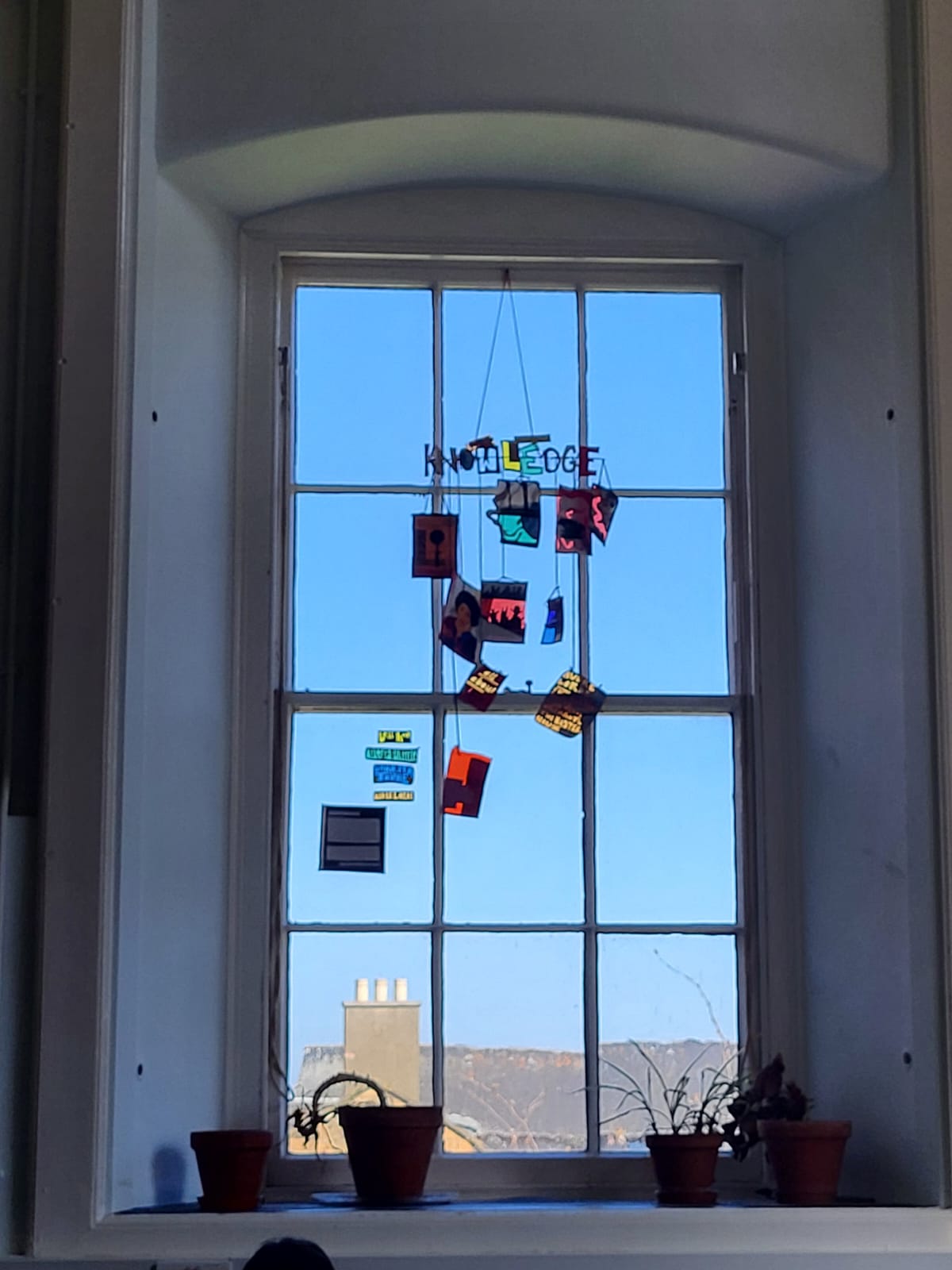
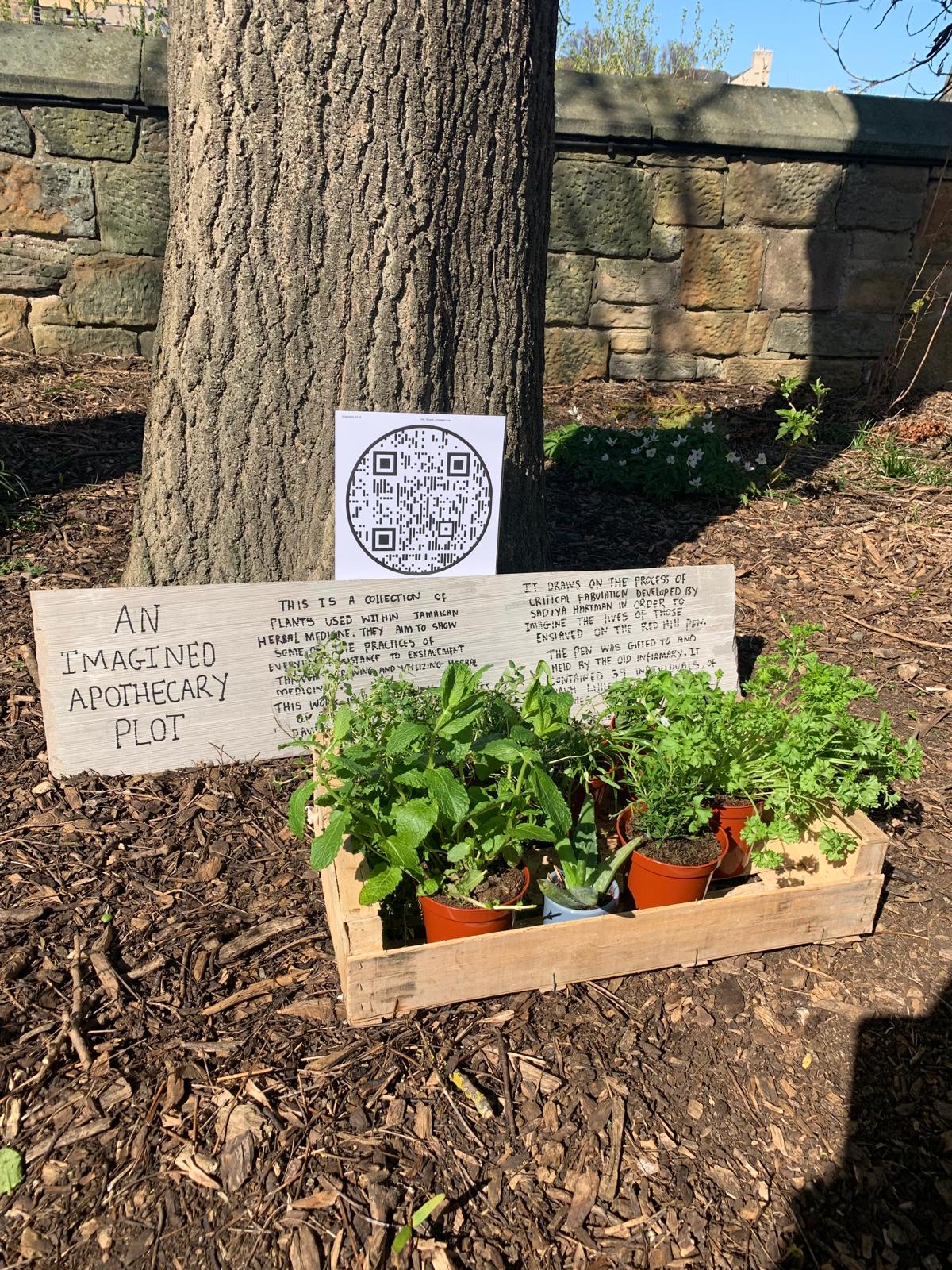
To attend to the interdisciplinarity of Black life, students learn from a range of knowledge materials, including academic texts, music, poetry, artworks, archives, and a walking tour. Through theoretically informed practice, students on this course produce a practical project (a site-specific installation or performance) as a spatial intervention that is both critical (informed by Black geographic thought) and creative (informed by Black artistic and creative practices).

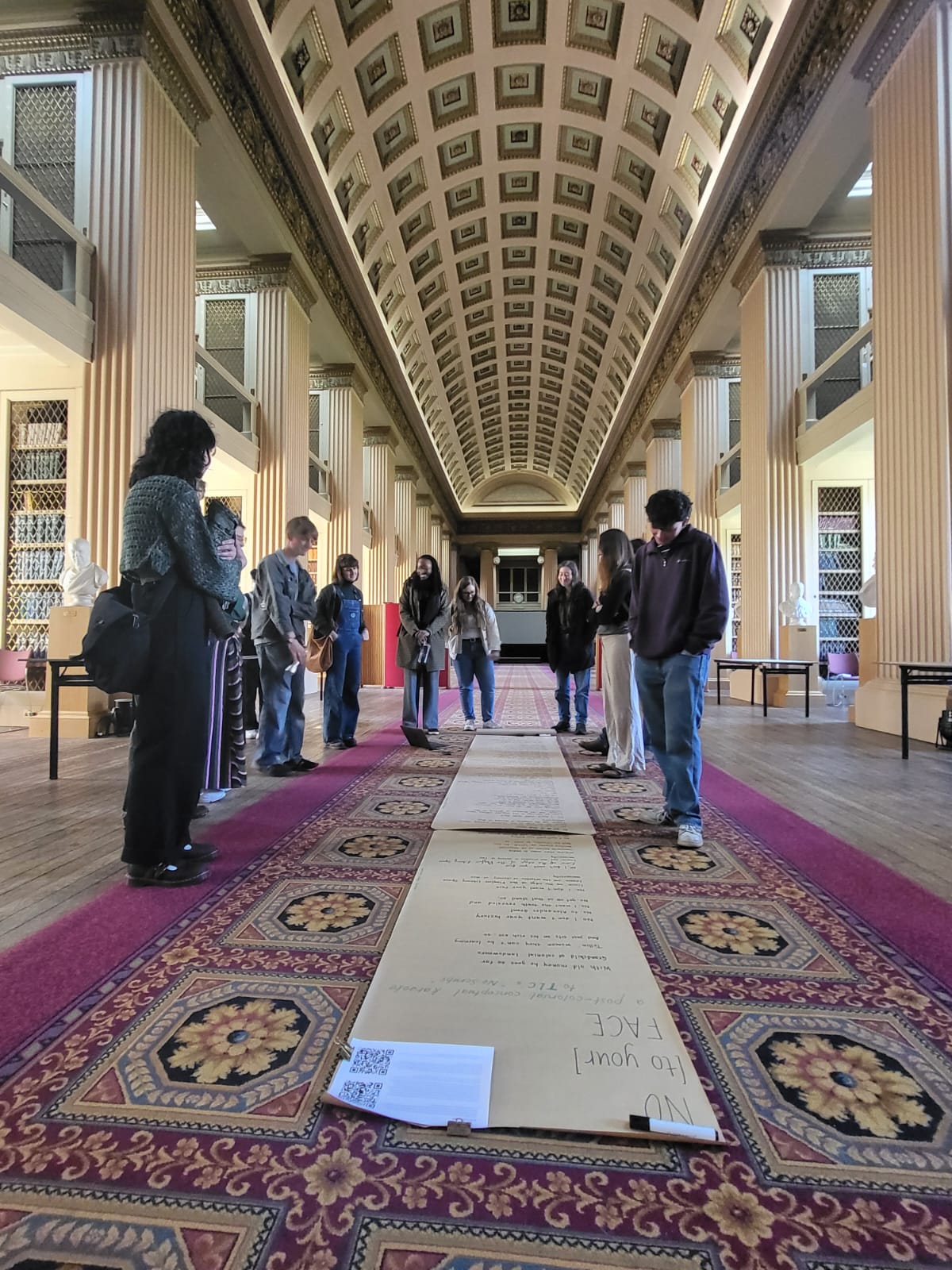




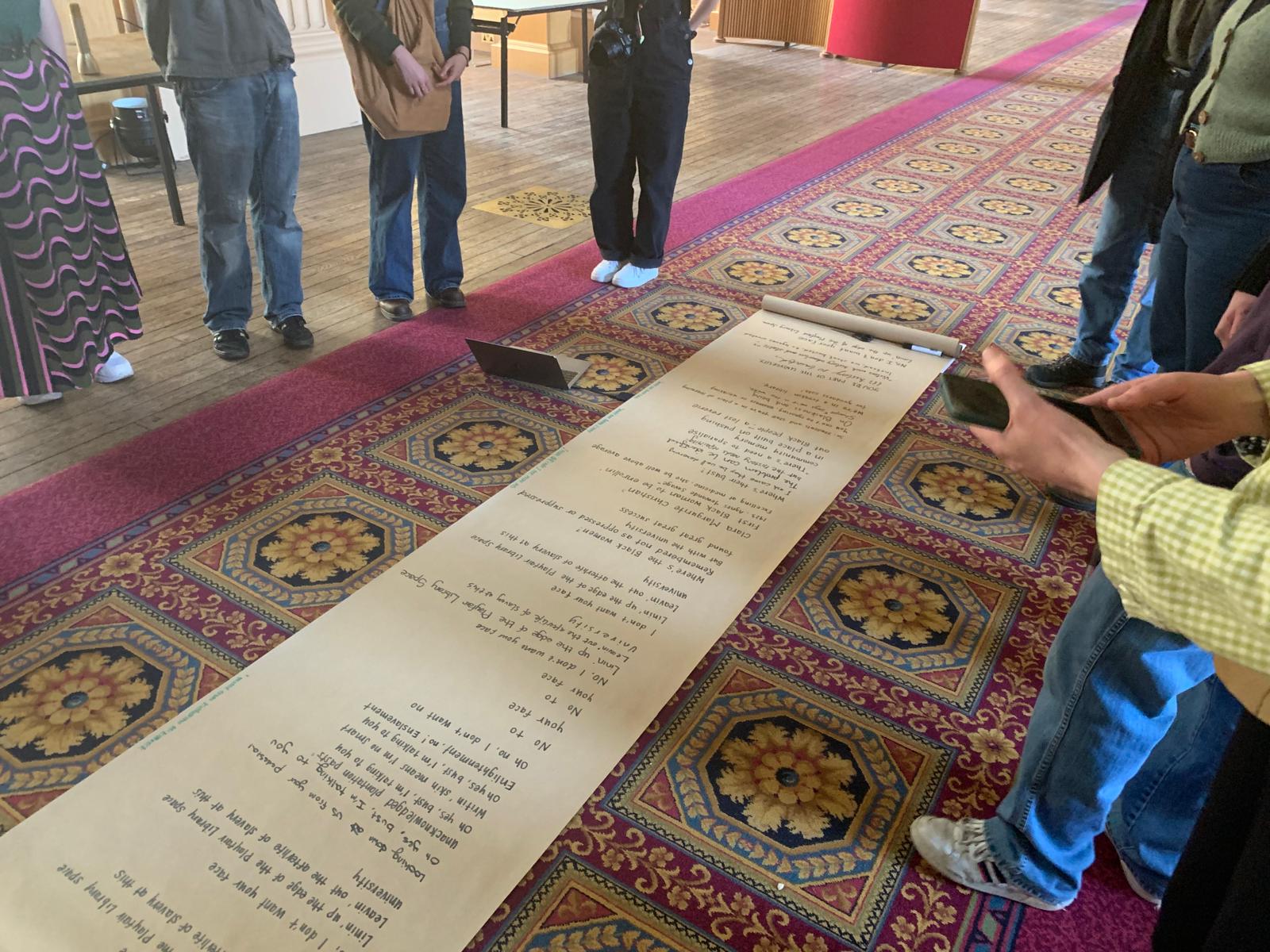

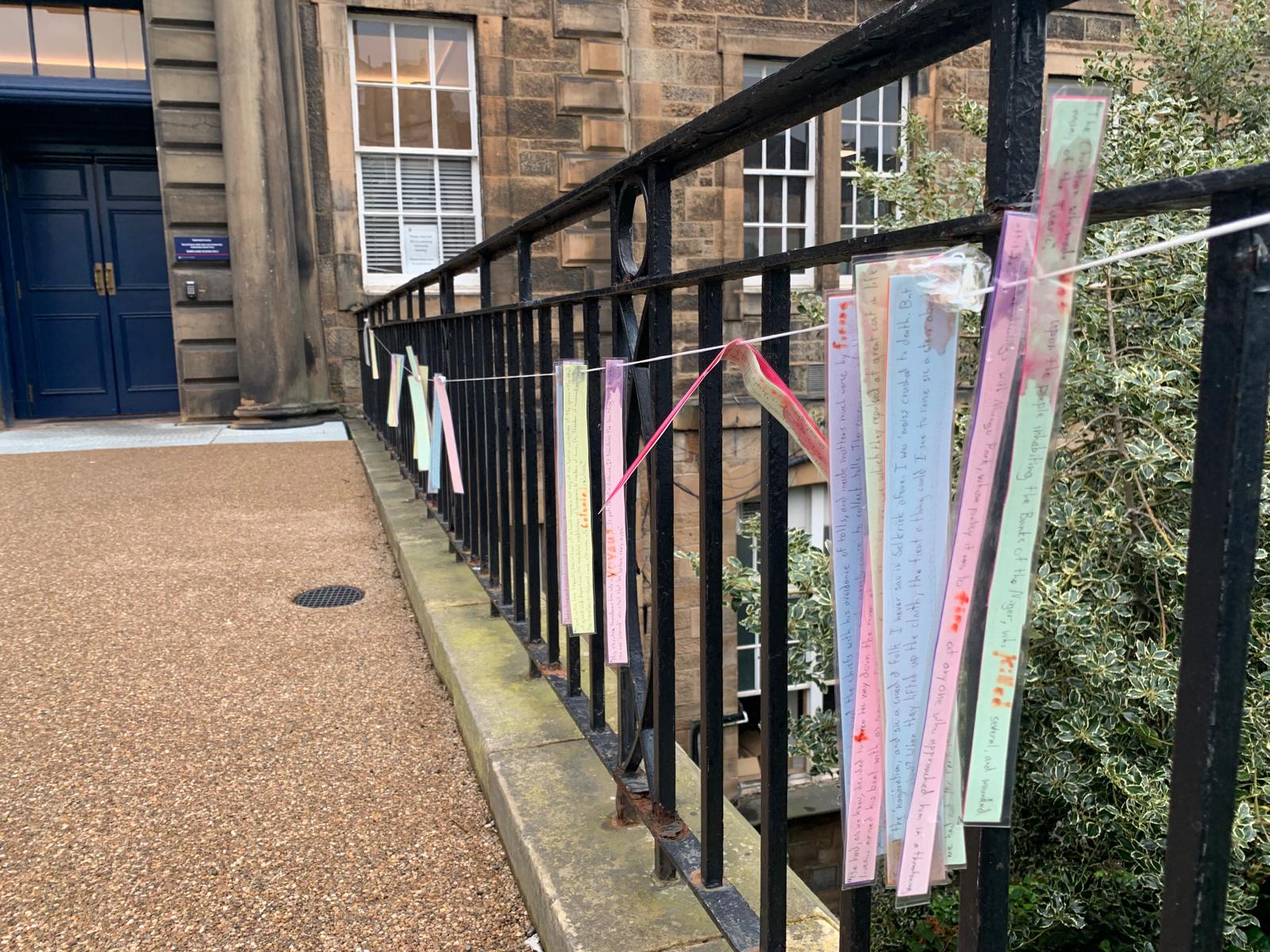
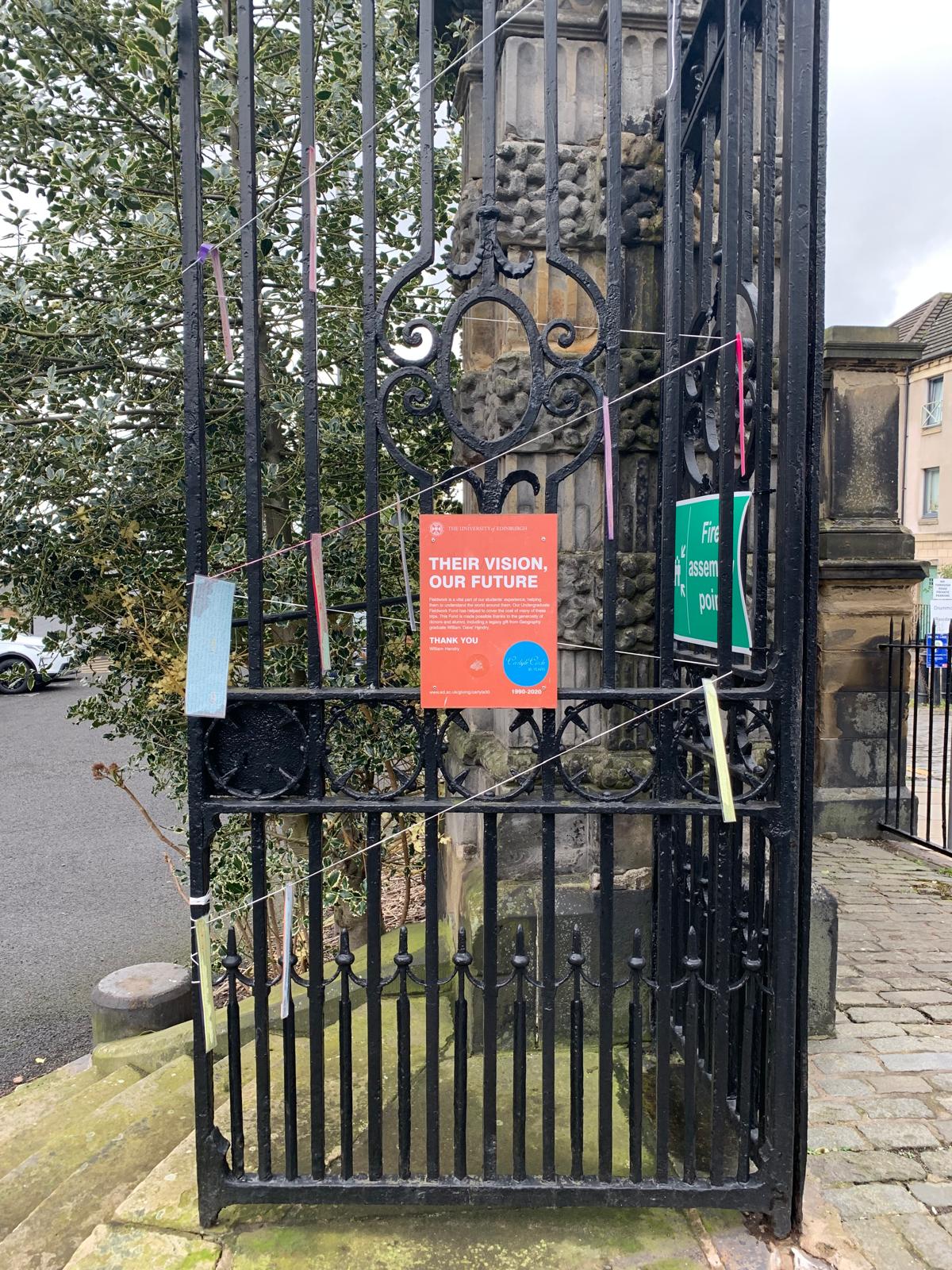
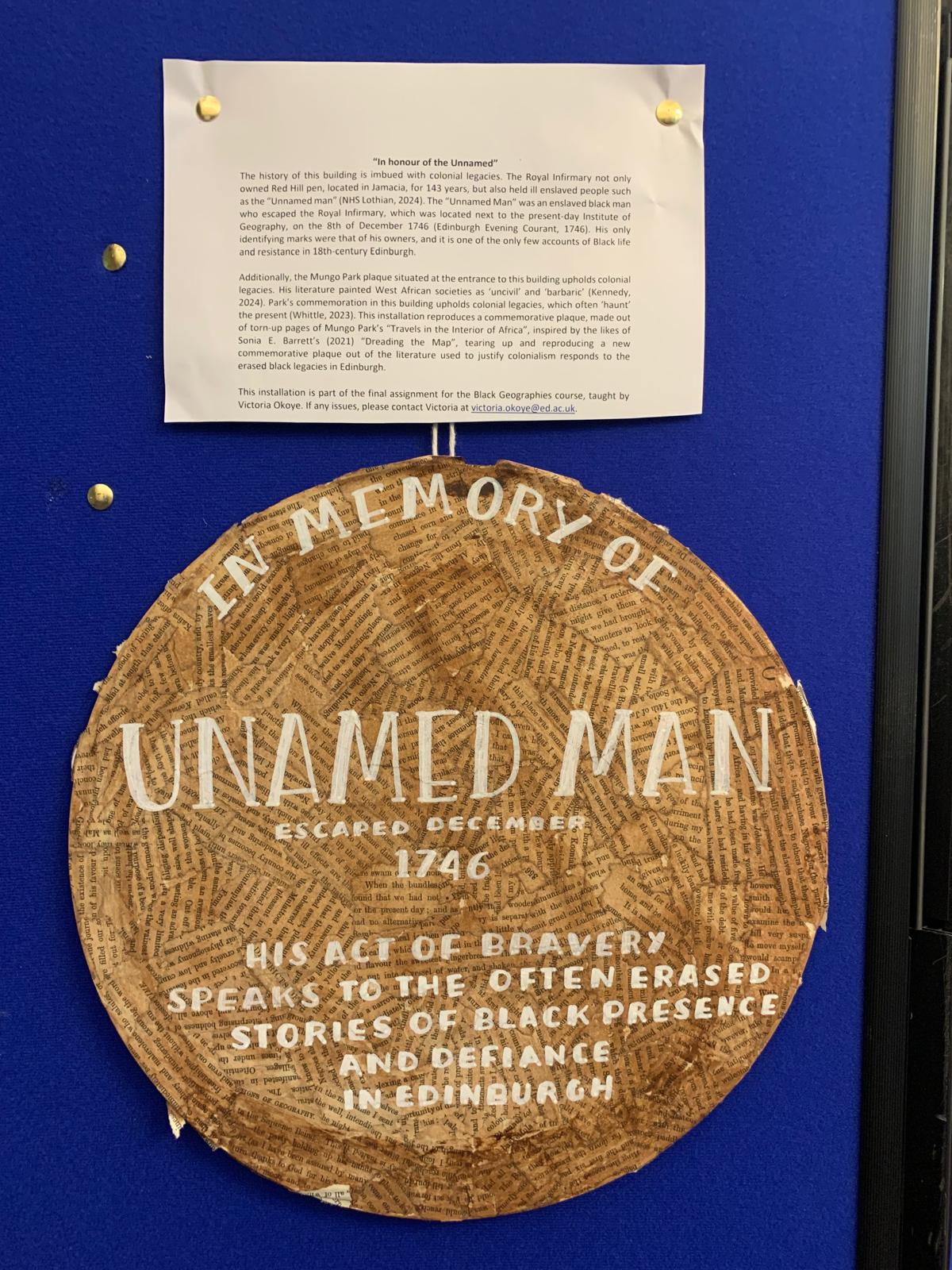
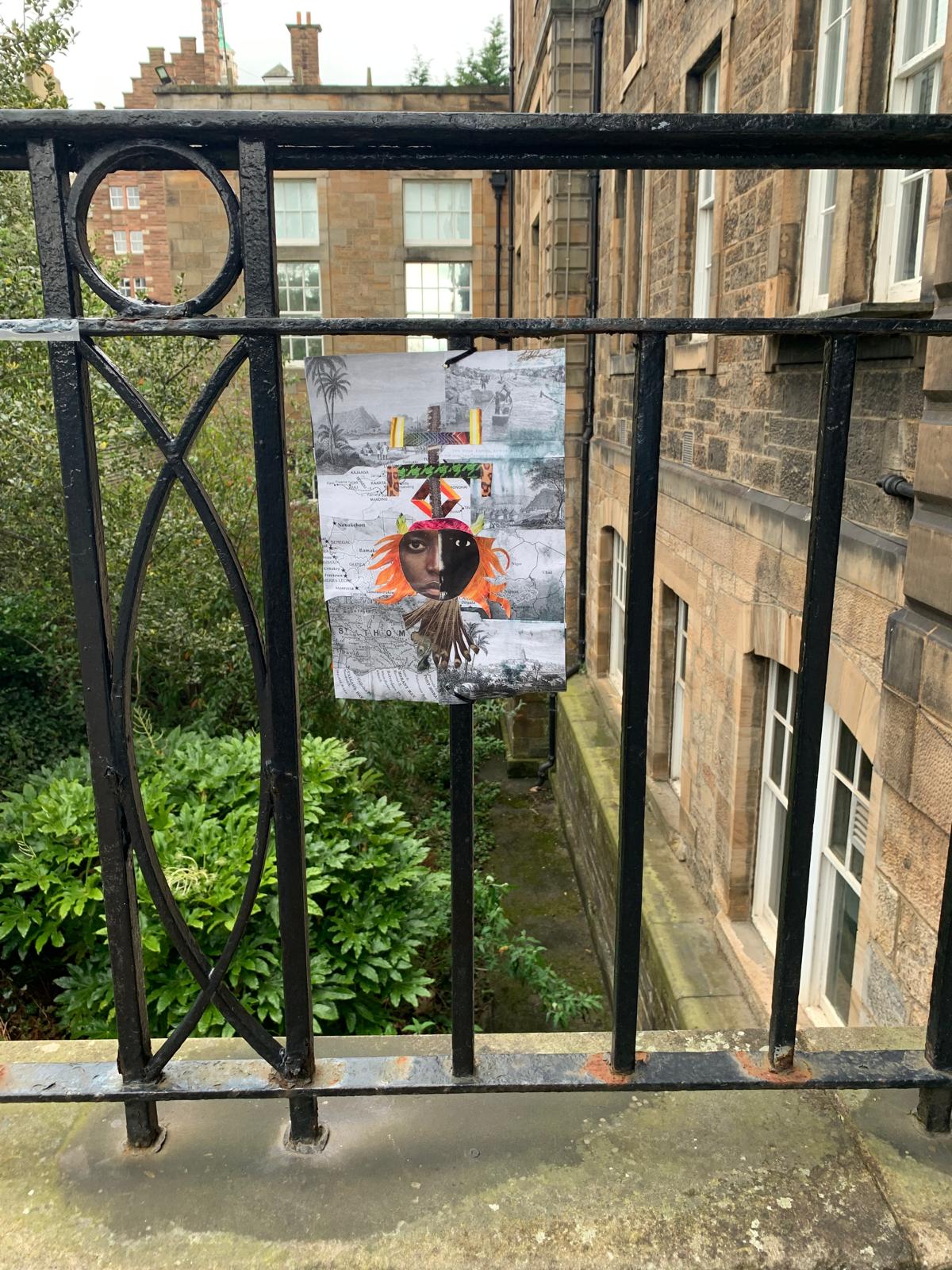
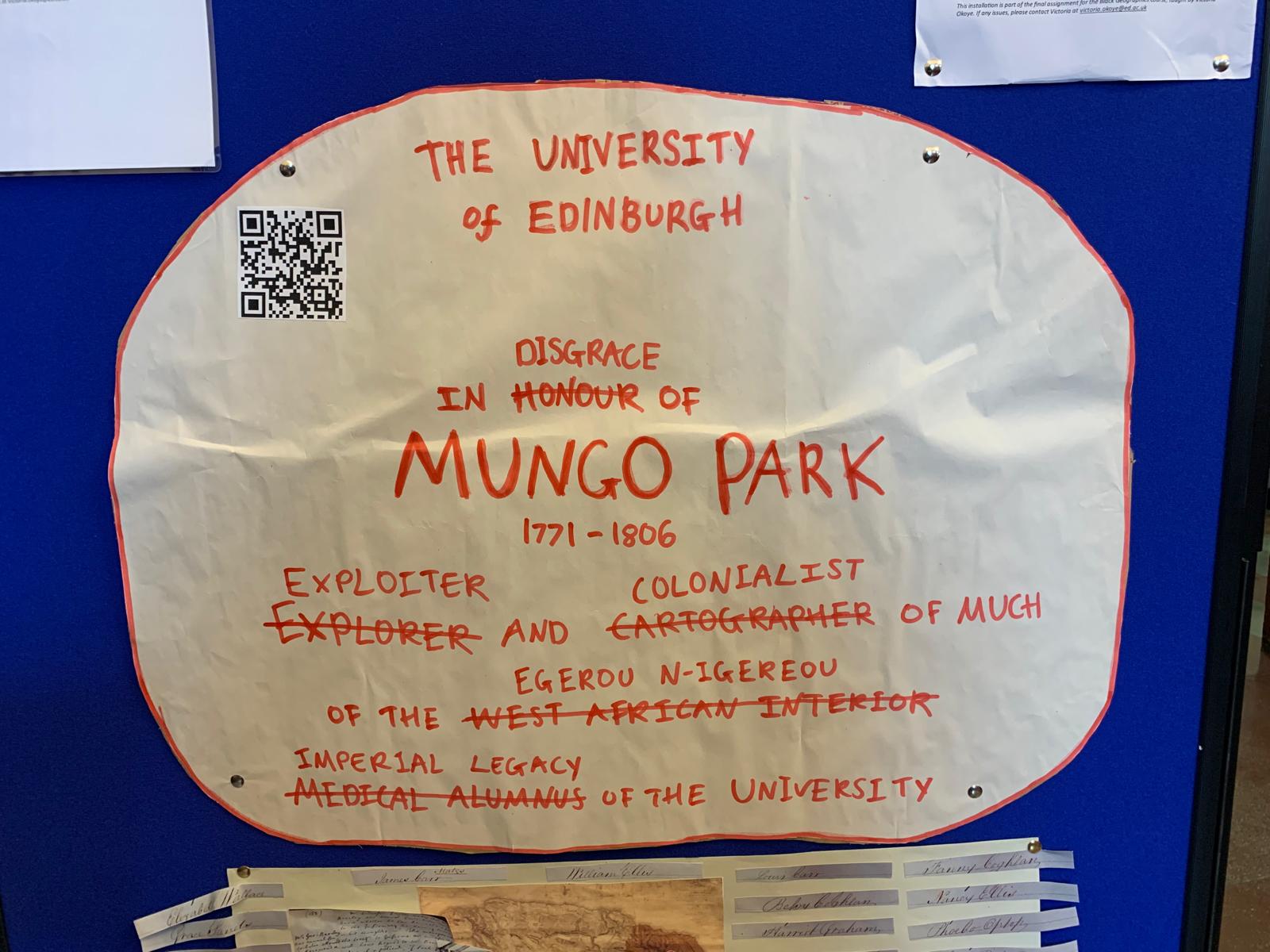
I was nominated by students for a teaching award in my first year teaching this course (Spring 2025). But more specifically, what has it meant for UoE students to study Black Geographies, thinking from Edinburgh to this place’s Black relations globally? In their own words, students say:
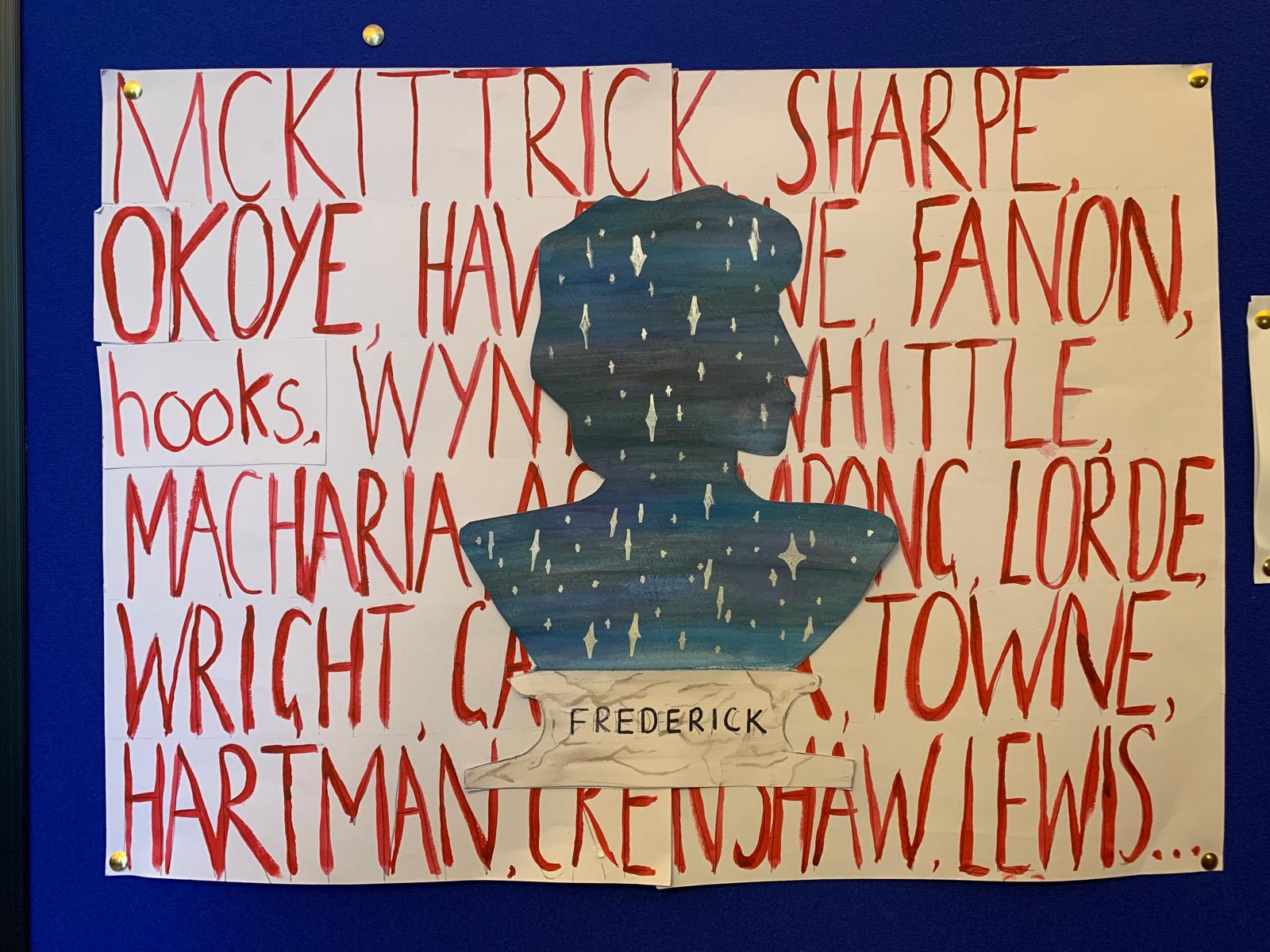
“Until engaging with this course, I walked through this space with a huge amount of naivety. Whilst I knew it was there, I did not want to or know how to engage with this discomfort which reflects a personal forgetfulness and lack of knowledge. Through my studies of Black academics and artists like [Katherine] McKittrick, [Alberta] Whittle, or [Sharita] Towne, represents my ability to unlearn and explore my own discomfort. In turn, my instillation reflects a small piece of a much larger puzzle which seeks to create more equitable engagement with space and narratives.”
“The process and experience of artistic creation has been profound in comparison to other forms of academic work undertaken during my time at university. Not only novel it has challenged preconceived ideas of how research and knowledge construction can be conducted. The act of flicking through materials, cutting, rearranging and rearranging again gave me an appreciation of the way collage breaks apart and remakes allowing the artist to create and experience a new way of seeing (see Fig. 3). In this way collage is a heuristic approach to learning, dispelling the need for perfect or optimised actions. The decision to pick collage as a method was also inspired by bell hook’s (1995) commitment to exploring how visual art can serve as a medium for cultural criticism and social transformation.”
“During a Geography undergraduate degree at the University of Edinburgh we have been taught decolonial geographic thinking; the key word there being thinking. Black Geographies has taught us how to actually define and practice this previously nebulous task of working decolonially. This class and project have also importantly shown us the breadth in which we can work to decolonise space, institutions, academia, and the ways in which we/others live, allowing everyone to contribute without the regurgitation of knowledge, but rather the application of Black methodologies to contest or contribute to ways of being in the world. The undertaking of project work, in process and final product to create a site-specific installation which addresses the Black histories of a space, has been vitally important in showing the myriad ways we as students can do more than just think. Through being taught Black methodologies, we have changed from commentator to contributor on how we address and repair Black histories and issues.”
“I’d also like to thank you for organising and teaching such a fascinating and moving course, it by far has been one of my favourite Geography courses at the university, I really appreciated the way it was taught and how each lecture and tutorial spoke to each other…It was my pleasure to participate in your course. The way the course was designed really facilitated my engagement. From the introductory lecture, the walking tour and tutorials, I was able to come up with an idea very early on of what I wanted to do/focus on which allowed me to get enthusiastic and invested in the project, whilst also engaging in the course content.”
 victoria ogoegbunam okoye
You must be logged in to post a comment.