Grafting Black Life (practice-based research)
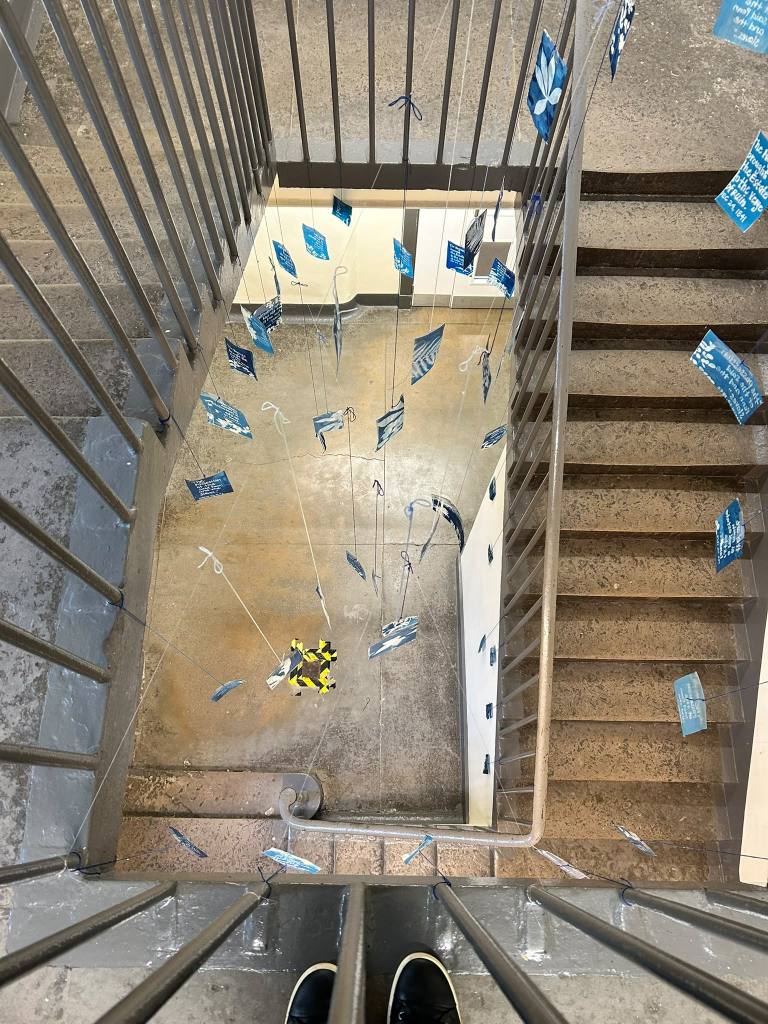
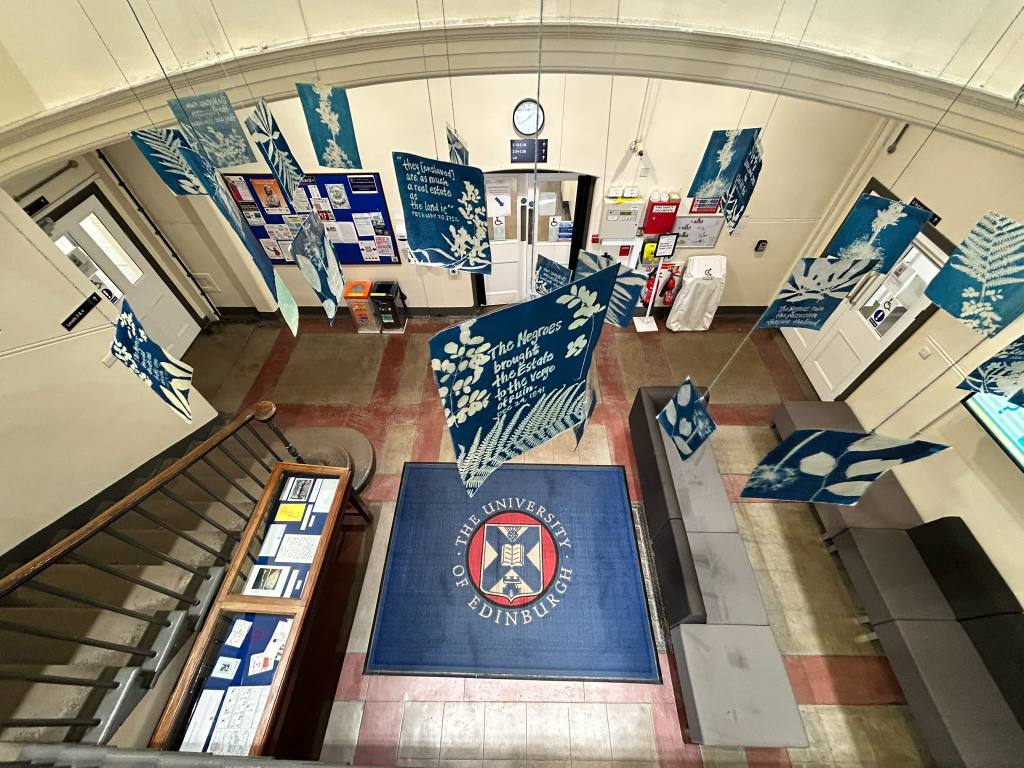
Site-specific art installation (cyanotype on vellum paper), 2026
Artist-researcher: Dr Victoria Ogoegbunam Okoye, Lecturer in Black Geographies, University of Edinburgh
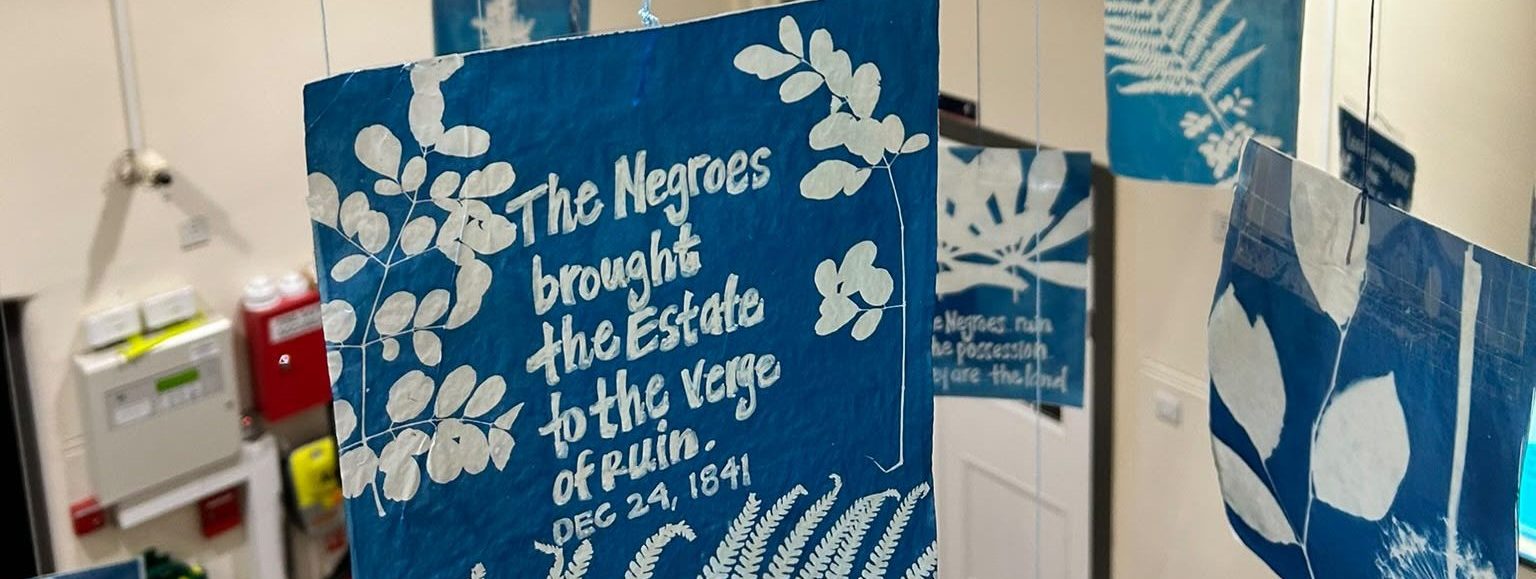
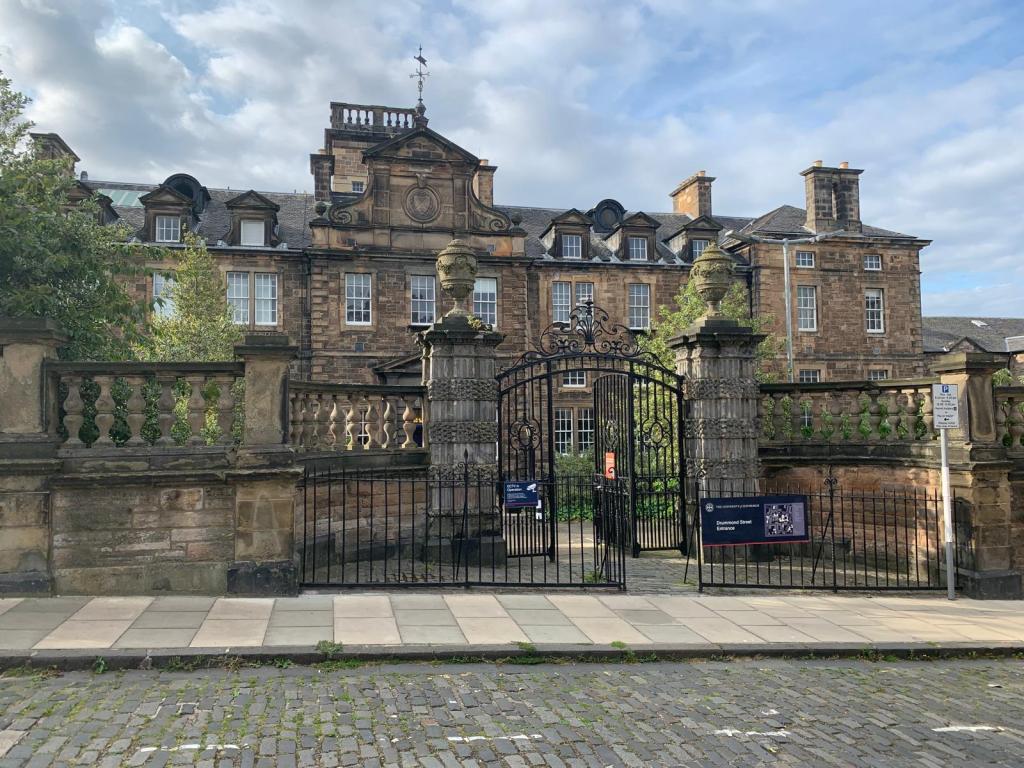
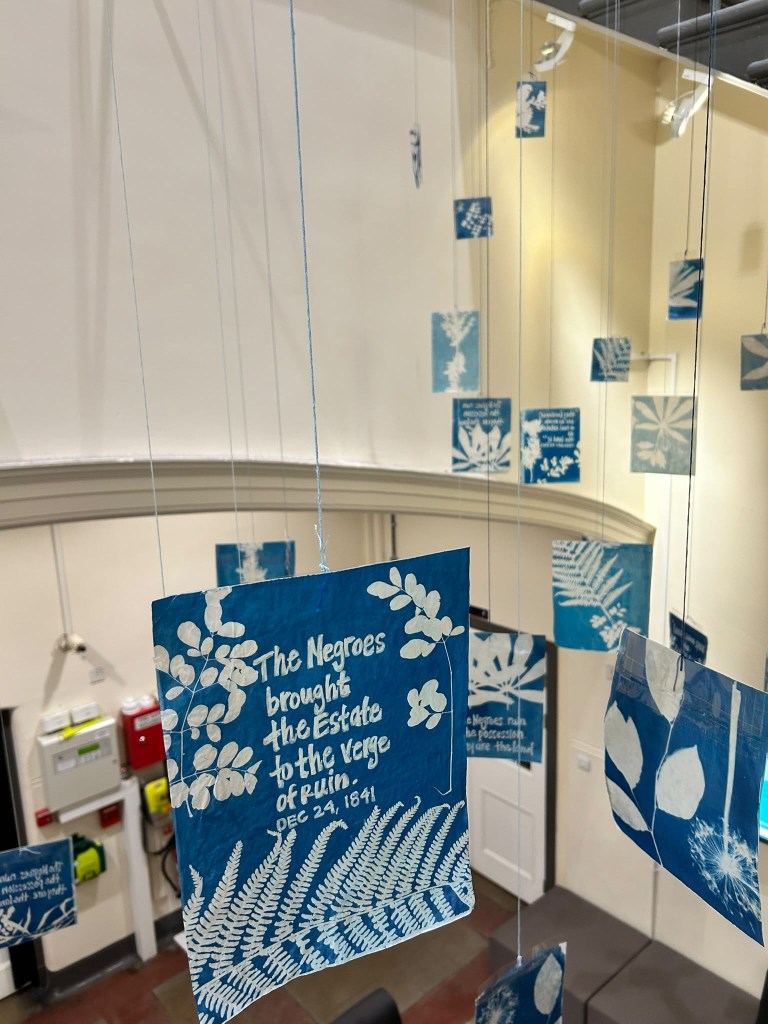
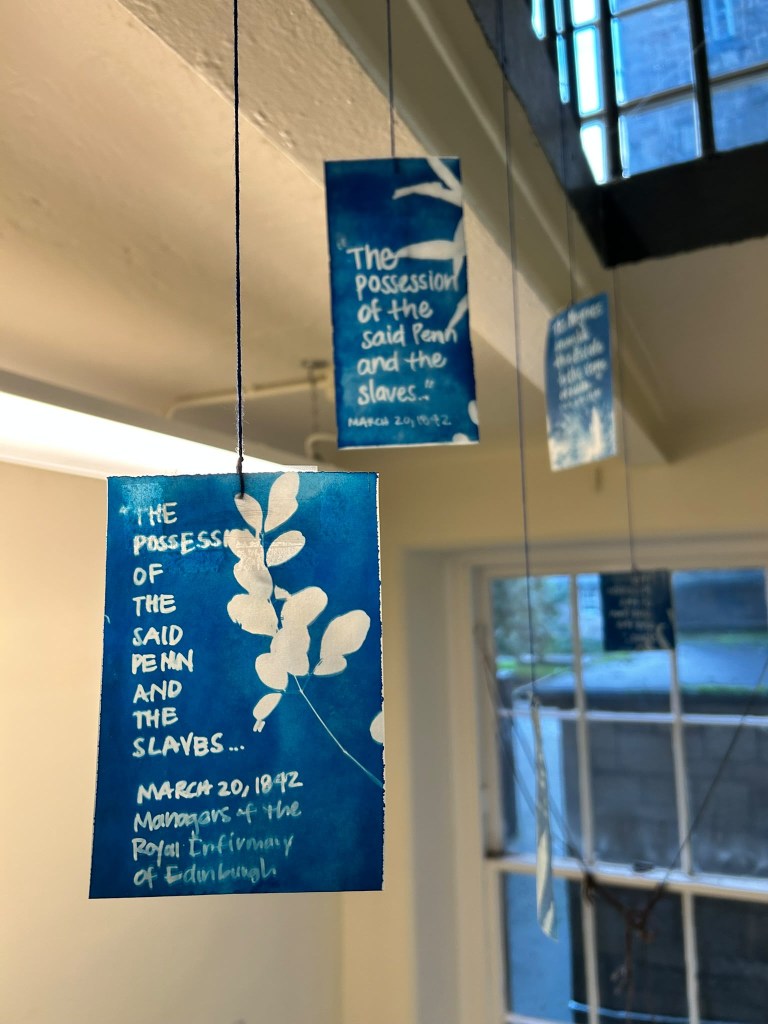
How do we honor Black life and Black ecological relation encountered in colonial archives and entangled with the place-based legacies of the everyday spaces we inhabit? This creative research intervenes in a University of Edinburgh campus building’s direct and entangled connections to plantation enslavement and colonial empire. This building, the Institute of Geography, was constructed by the Royal Infirmary of Edinburgh as part of its surgical expansions and operations, directly benefited from profits from enslavement. This included at Red Hill Pen in St. Thomas-in-the-East, Jamaica. In 1749-1750, the Royal Infirmary took possession of Red Hill Pen, a 420-acre livestock estate in St. Thomas-in-the-East, in southeastern Jamaica. This “possession” included the land as well as 39 enslaved people, including three children. In pens like Red Hill, enslaved people reared livestock for animal labor, meat, and other products sold to plantations, which produced large-scale cash crops. For 143 years, the Royal Infirmary claimed possession of Red Hill Pen, including multiple generations of enslaved (and then apprenticed) Black peoples and the land itself.
My installation locates this building within the human and ecological exploitation of plantation enslavement at the center of European modernity and progress and our contemporary climate crisis. Europeans captured and enslaved and estimated 12.5 million people, including approximately 1 million Igbo people, through transatlantic enslavement. As a US-born Igbo diasporan with roots and familial relations to southeastern Nigeria (ala Igbo), I intervene in these place-based legacies by centering Black thought and practice (including that of my ancestors), drawing on their inventive ways of nurturing plant life, working with plants, and producing beautiful plant arrangements within constraints of enclosure – plantation, colony, and other forms.
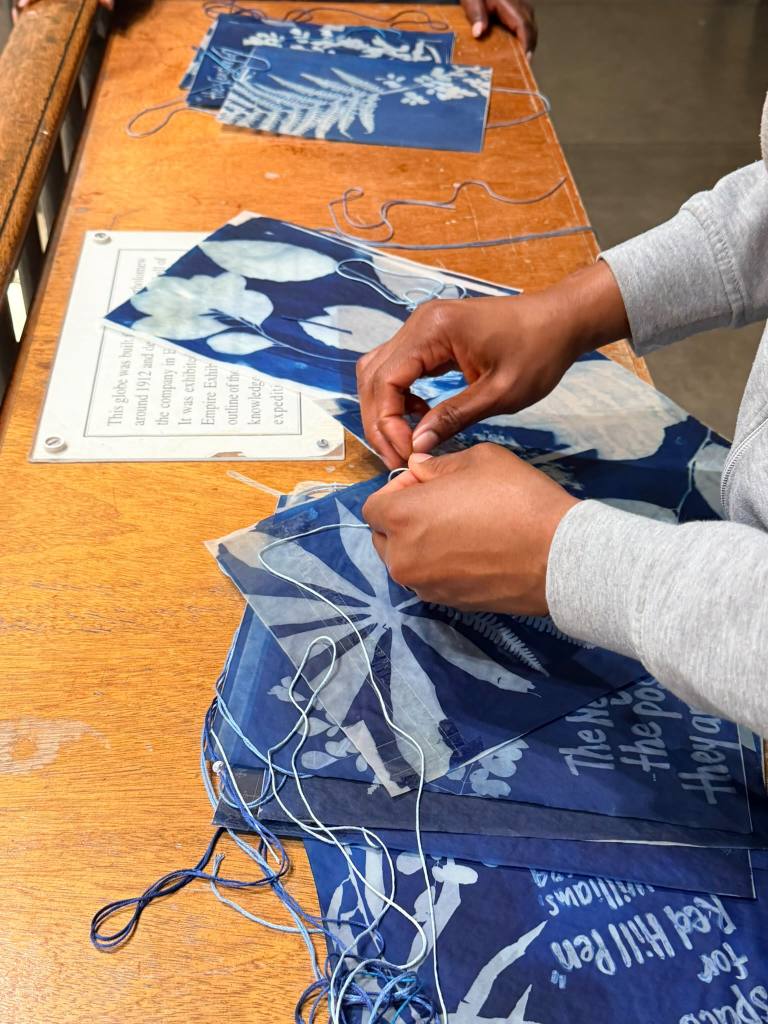
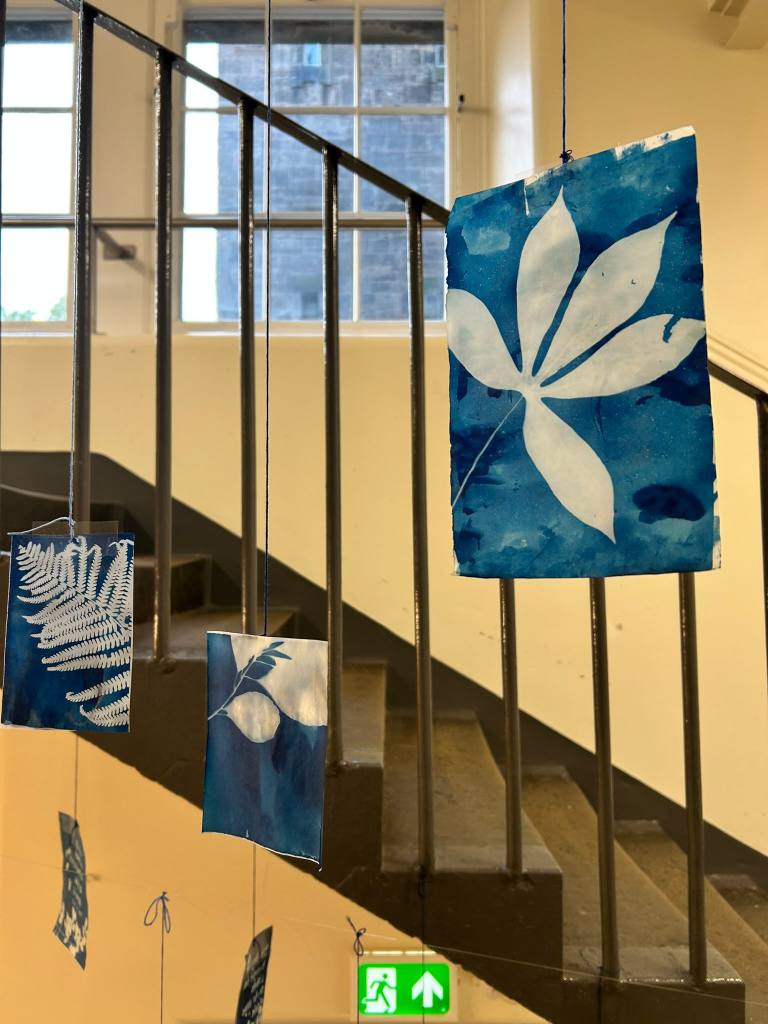
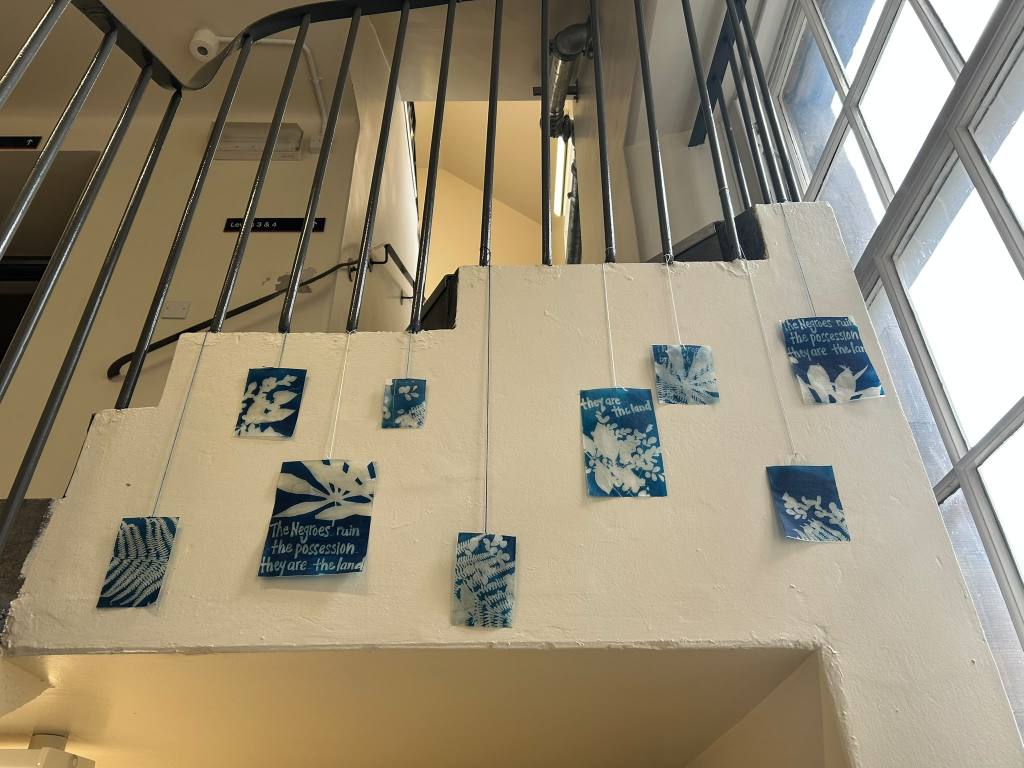
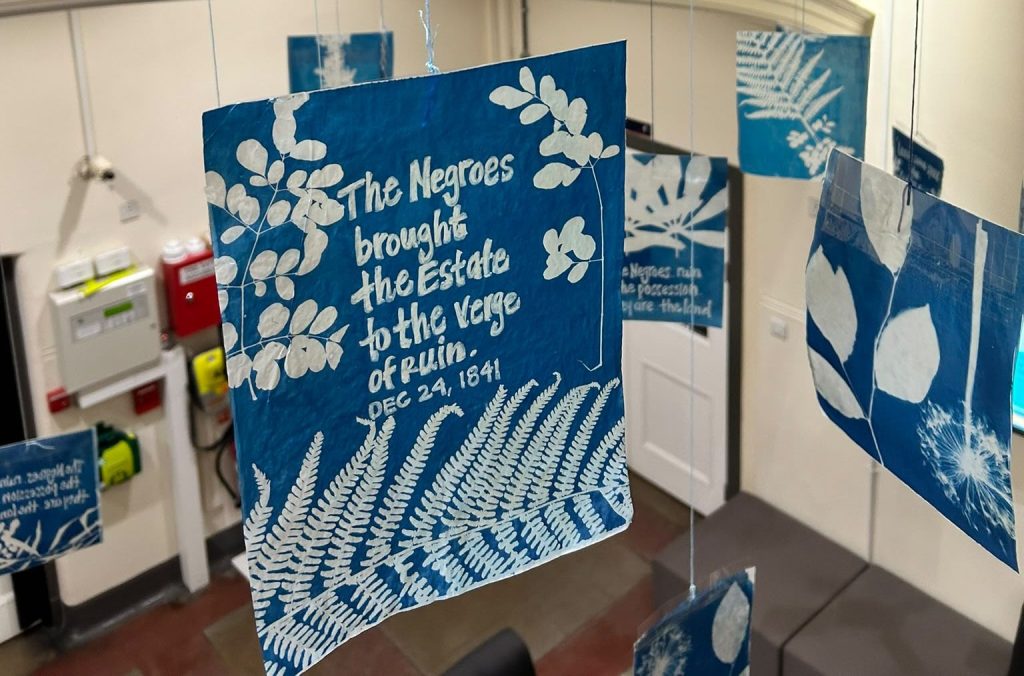
In this work, I read and analyzed archives (including Royal Infirmary correspondences, inventories, and government slave registries) through a creative practice with cyanotype printing (blue-colored printing using iron salts, water, sunlight). I worked with plants that I collected from around the Geography and ECCI buildings; from my mother’s family compound in Ikeduru, Imo State, Nigeria; and from my father’s family compound in Idemmili North, Anambra State, Nigeria. In turn, I drew on from my mother’s and maternal grandmother’s practice of working with and attuning to plants and my maternal grandfather’s horticultural practice of plant grafting, which joins plants so that they might grow together.
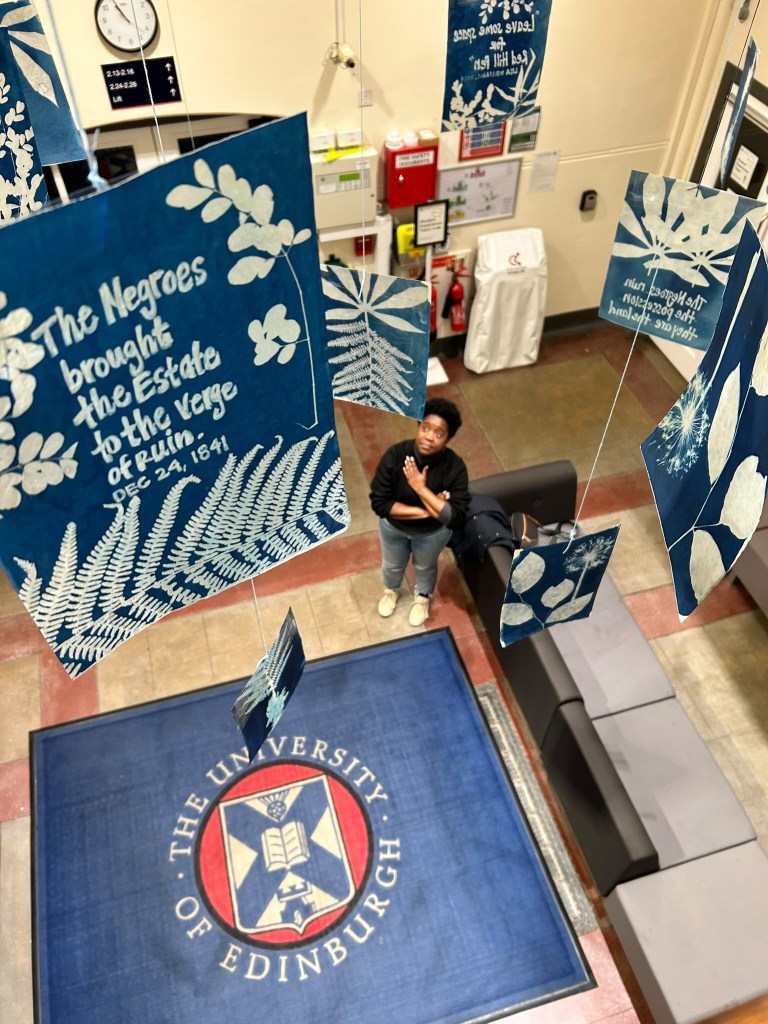
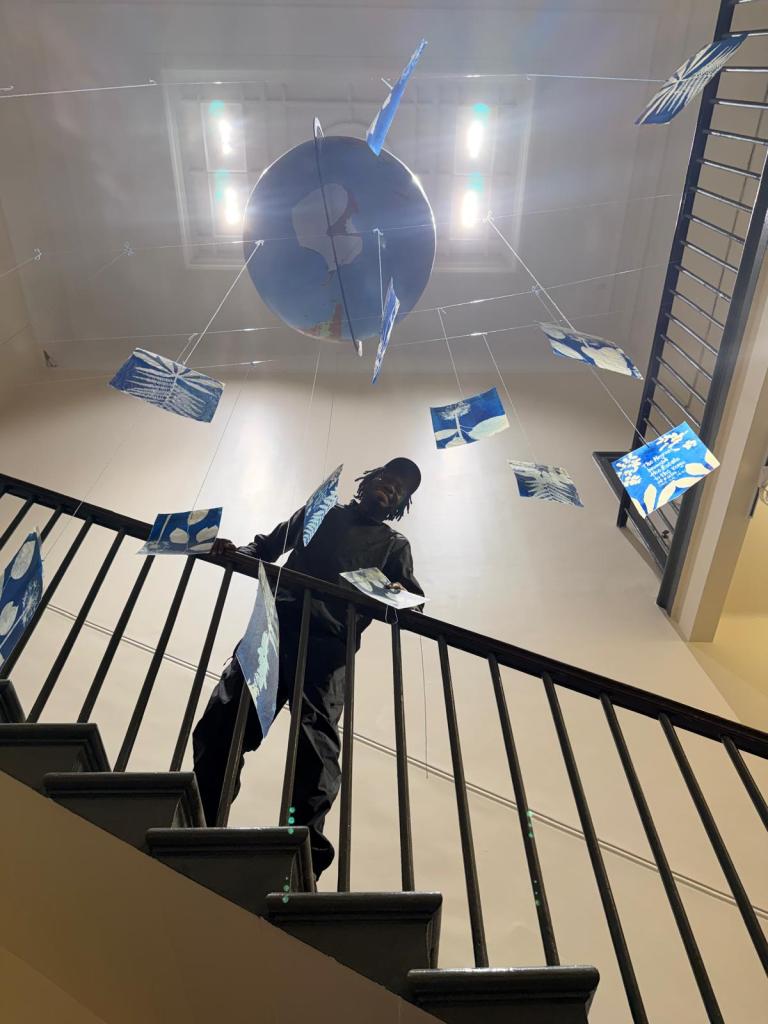
Through a cyanotype printmaking process, I “graft” together plants from Scotland and southeastern Nigeria, alongside statements and sentences from colonial archives. I disassemble and re-assemble words and plants, upturning colonial logics of separation, distance, and possession. I locate this installation – dozens of suspended cyanotype prints that join together plants and archival excerpts – in the building’s stairwells, which are meaningful crossroads for the placement of artwork offerings for ancestors; both my own and the wider Black diaspora of ancestors connected to this building through the entanglements of enslavement at Red Hill Pen. I use this intervention in the building’s stairwells to show how from the “demonic grounds” of colonial and plantocratic dispossession, Black relationalities between humans and earth plot, take root, and grow. Looking for, recognizing, and honoring these Black relationalities enables me to address these histories otherwise, in inventive ways that move beyond reproducing colonial and plantocratic logics. This installation, grounded in Igbo territorial ways of knowing and doing, tells a story of Black relationality and the intense entanglement between our geographies – Edinburgh, Scotland, Red Hill, Jamaica, and Igboland (southeastern Nigeria).
Acknowledgements: I am grateful to my mother, to her sister, my aunt, and to my grandparents, and all of my ancestors who inspire and gift me with knowledge and appreciation for plants and flowers. I am grateful to Olajide Adegbite and Yanique Norman for their support installing this artwork in the Institute of Geography building.
This research was funded by the Moray Endowment Fund, University of Edinburgh. The project was approved by the School of GeoSciences Ethics Committee, with a risk assessment approved by School of GeoSciences Health and Safety Committee.


You must be logged in to post a comment.